Fragmented records
Without a shared standard, the same clinical information was recorded in different ways across systems.
Clinical data that connects.
A structured framework aligning disease classification, clinical workflows, medicines and laboratory data.
What stood in the way.
Healthcare systems used inconsistent disease and clinical data standards. That left records fragmented, made diagnosis mapping difficult and weakened interoperability between systems.
Without a shared standard, the same clinical information was recorded in different ways across systems.
Mapping diagnoses from one system to another was hard when each used its own classification.
Inconsistent standards made it difficult for systems to exchange clinical data and interpret it correctly.
How we answered it.
We created a research-based, standardised framework that brings disease classification, clinical workflows, medicines and laboratory data into one structured model. Each part of the framework is designed to connect to the others, so a disease links to its symptoms
The parts that made the difference.
A structured classification of diseases gives every condition a consistent place in the model.
Clinical data is described using one standard, so records from different sources line up.
Symptoms are mapped to diseases, making the link between presentation and diagnosis explicit.
Medicines are described to a common standard within the model.
What changed for the client.
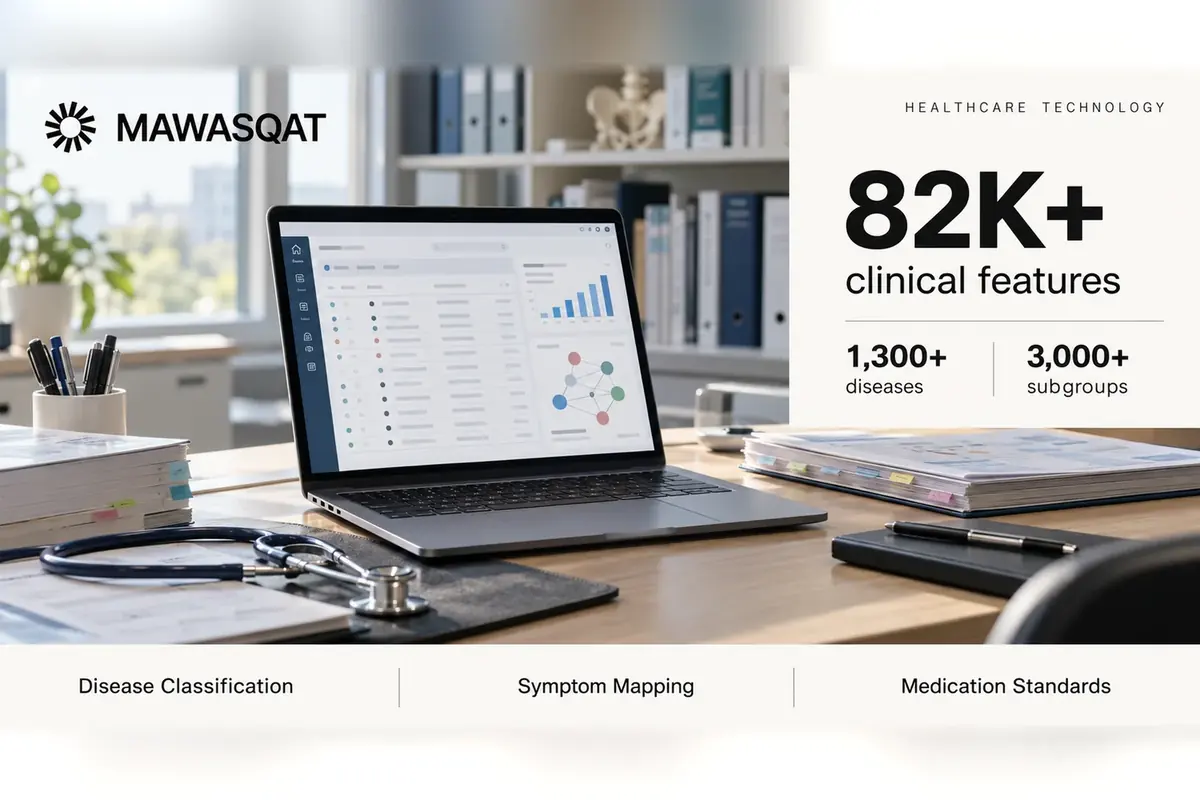
The framework gives Mawasqat a broad, structured foundation for clinical data.
Part of our AI and machine learning work.
The next big thing starts with a conversation.
An idea, a challenge, a “what if”. Tell us what you have in mind, and we’ll figure out the next step together.
What happens next
Find us on